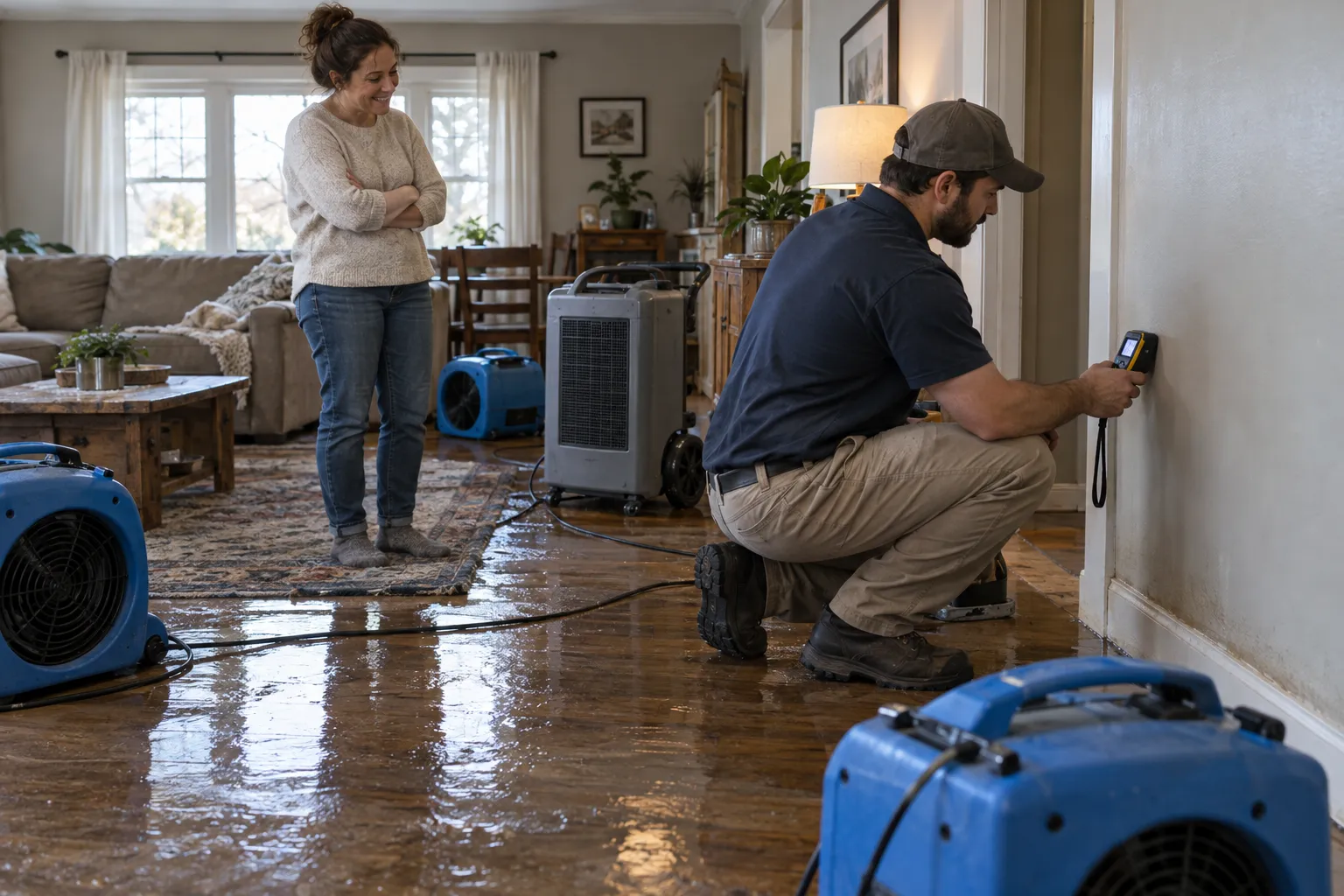
Water Damage Restoration
Found water where it should not be? Here is what happens next, and how a local provider can help.
Found water where it should not be? Take a breath. Varygas Restoration connects you with independent local providers who can dry, clean and repair, starting with a simple plan.
No obligation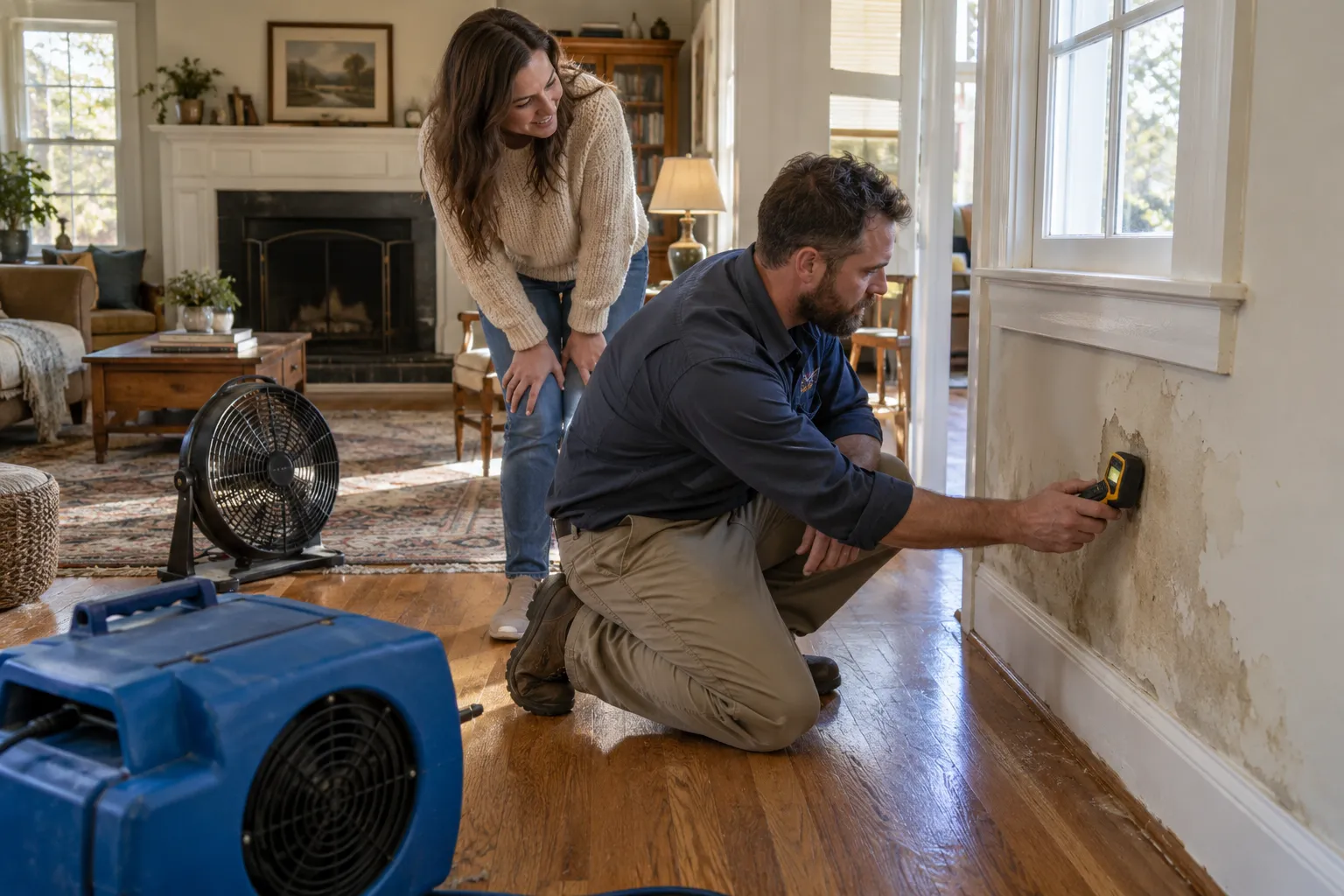
The first day often decides how much has to be torn out. Reaching a provider early gives drying a real head start.
Independent providers in our network work in your part of the Central New York area and know the older homes, damp basements and winter damage common nearby.
Ask for the scope, the equipment and the price in writing. A clear quote helps you compare options and avoid surprises once work begins.
Asking for an estimate does not lock you in. Take your time, read the details and choose the option that feels right.
You walked in and the floor was wet. Or you heard a drip that should not be there. Take a breath. This happens to many homeowners, and it can be sorted out.
Here is the plain truth about timing. In the first hours, water spreads into carpet, drywall and wood. Within a day or two, those materials soak it up and start to swell. After a few days, mold can begin to grow. So the sooner a trained provider starts drying, the less there is to tear out later.
Varygas Restoration is a referral service. We do not do the work. We connect you with independent providers in our network who handle emergency water damage repair, flooded basement cleanup, water extraction and structural drying near Syracuse.
Safety comes first. If you can do it safely, shut off the water source. If water is near outlets or the panel, keep clear and let a pro tell you when it is safe.
Not ready to talk yet? That is fine. You can ask for an estimate and read the details at your own pace.
Varygas Restoration sits between you and the work. You share what happened. Your request goes to an independent local provider in our network. The provider reaches out, looks at the damage and explains the plan. Varygas Restoration does not send crews, set prices or do repairs. The provider does all of that.
Water follows a pattern. Knowing it can help you stay steady.
Early action usually means less to tear out. A wet carpet that is dried quickly may stay in place. The same carpet left for days may need to go. Fewer removed materials often means a smaller bill, though every job is different.
Stay safe. Shut off the water source if you can reach it. Turn off power only if you can do it safely, and keep clear of standing water near outlets. Take photos before you move things. Then reach out to a provider.
The provider will ask a few simple questions. Where did the water come from? How long has it been there? Which rooms are wet? Honest answers help them plan equipment and give you a clearer written quote.
Varygas Restoration helps homeowners in Syracuse and across the Central New York area. That includes busy town centers, quiet side streets and the older neighborhoods in between.
Homes here have their own habits. Many are older, with full basements, stone or block foundations and tight crawl spaces. Multi-family houses are common, so a leak upstairs can become a problem for the neighbor below. Compact one-and-a-half story homes often have knee walls and low attic spaces where moisture likes to hide.
The weather adds to it. Cold, snowy winters can split pipes. Spring snowmelt fills window wells and pushes against foundations. Coastal storms can bring flooding and wind-driven rain.
Provider coverage differs from one town to the next. Some providers cover wide areas, and others stay close to home. Request a callback to check provider availability for your street.
If you would rather write it all down first, send a short request and ask for an estimate.
Long, cold winters put pipes under stress. A pipe that splits in a cold snap can fill a wall cavity before anyone notices. Spring snowmelt sends water toward foundations. Coastal storms can push groundwater up through basement floors.
Many homes in the region are older. Stone and block foundations let moisture seep through joints. Full basements often hold the furnace, the laundry and boxes of keepsakes. Multi-family buildings add another twist, since water can travel from one unit to the next.
A flooded basement is more than a wet floor. The water may be fairly clean, or it may carry sewage or runoff. Providers often check this first, because it changes the safety gear and the cleanup steps. Please do not wade in until you know what is in the water.
Price depends on how much water there is, how long it sat, which materials got wet and how hard they are to reach. As a rough guide in the U.S., smaller jobs often run about $1,200 to $3,000. Larger or contaminated losses can climb to $5,000 or more. Treat these as ranges, not promises.
A written quote lists the work, the equipment and the scope. It helps you compare options and spot surprises. Ask what could change the price before work starts, and keep a copy.
Some policies may cover sudden damage, such as a burst pipe. Slow leaks and outside flooding are often treated differently, so check your policy. Providers can often help document damage for a claim. Keep photos, receipts and notes in one place.
Clear gutters and point downspouts away from the house. Grade soil so it slopes away from the foundation. Test your sump pump before spring. Insulate pipes along cold outside walls. Small steps now can save a lot of stress later.
Water problems feel big, but the first step is small. Tell us where the water is and what you can see. A provider in our network can take it from there. Request a callback to check provider availability, or send a request when it suits you. There is no obligation.
Tell us what happened and a local provider can take it from there. Request a callback to check provider availability, or send the short request form.
No obligationFaster than most people expect. Within hours, water spreads and soaks into porous materials. Within a day or two, drywall and wood can swell. After a few days, mold can start. Early drying usually means less tear-out and a smaller repair list.
In the U.S., smaller jobs often fall around $1,200 to $3,000, and larger or contaminated losses can reach $5,000 or more. Costs vary with water amount, materials and access. Always ask the provider for a written quote before work begins.
It depends on your policy and the cause. Some policies may cover sudden damage like a burst pipe, while outside flooding is often handled differently. Check your policy. Providers can often help document damage for a claim.
For a small, clean spill, maybe. For deeper water, unknown water sources or wet walls, it is risky. Hidden moisture and unsafe water are common. A local provider can check conditions and explain what is safe.
No. Varygas Restoration is a referral service. We connect you with independent local providers in our network. The provider does the work, sets the price and gives you the written quote.
Pick the situation that sounds most like yours. Each page explains what the work involves, how timing plays in, and what shapes the price. A local provider handles the work, not Varygas Restoration.
Found water where it should not be? Here is what happens next, and how a local provider can help.
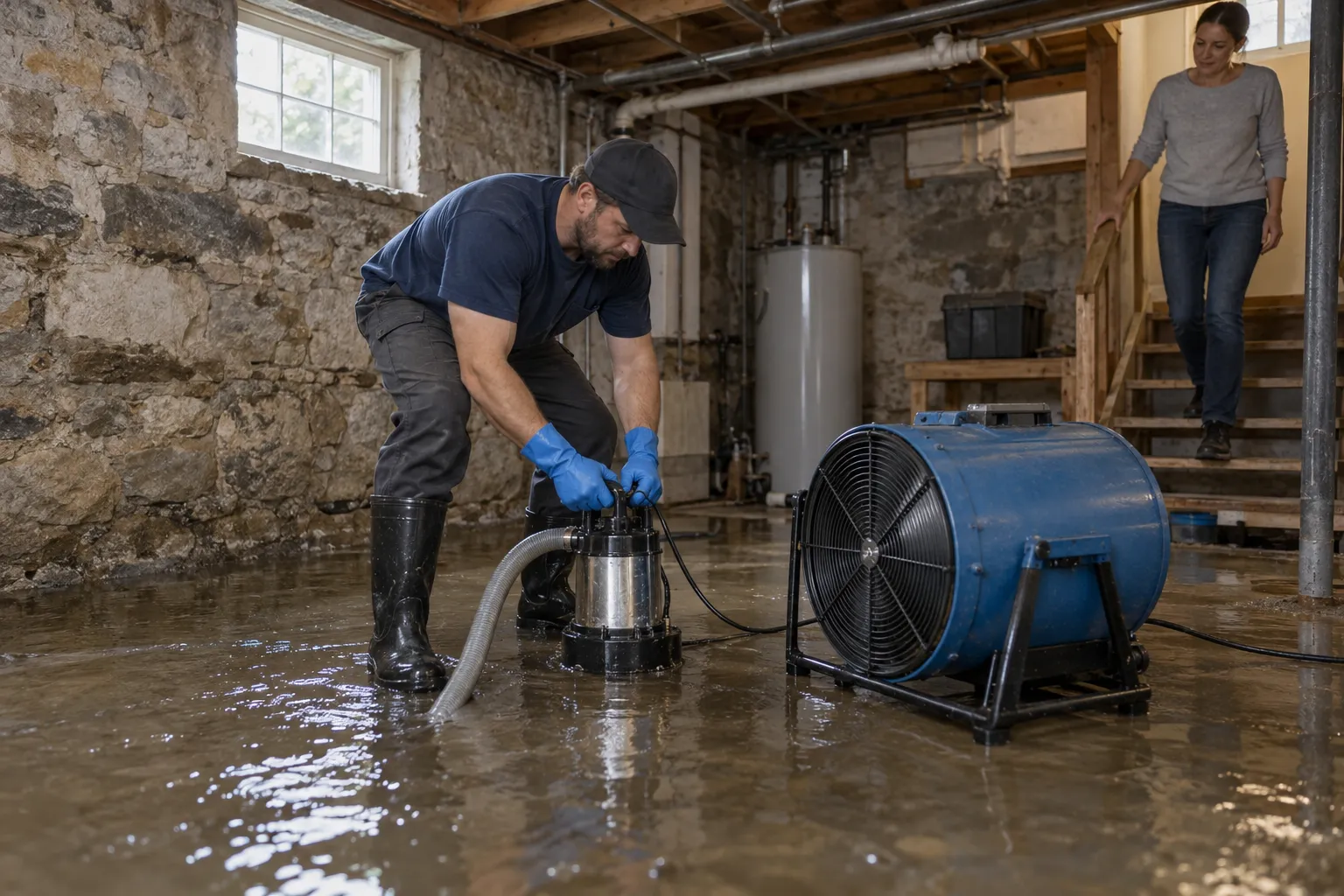
A flooded basement feels huge, but a local provider can walk you through it, starting with the first few hours.
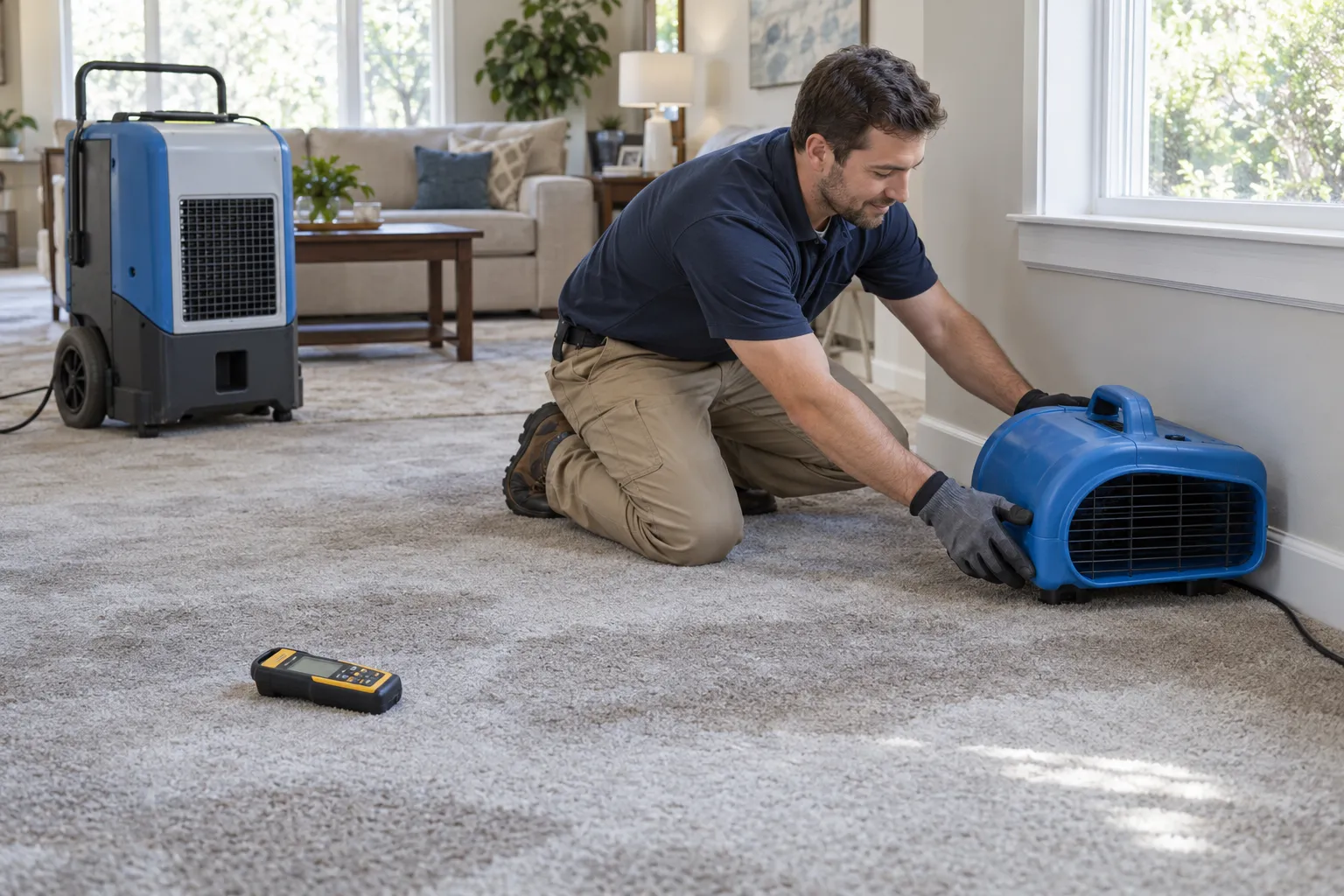
Standing water and damp walls need two steps: get the water out, then dry the structure fully.
Tell us what happened and a local provider can take it from there. Request a callback to check provider availability, or send the short request form.
No obligation