Straight answers to common questions
Water Damage Frequently Asked Questions
Call Now With Your Question
What should I do first when I find water damage?
Start with safety. If water is near outlets or appliances, turn off power at the breaker if you can do so safely. Next, stop the source by shutting off the main water valve. Move valuables and furniture out of the wet area, and take photos for your records. Then call a water damage restoration provider so extraction and drying can start as soon as possible.
How long does it take to dry out a house after water damage?
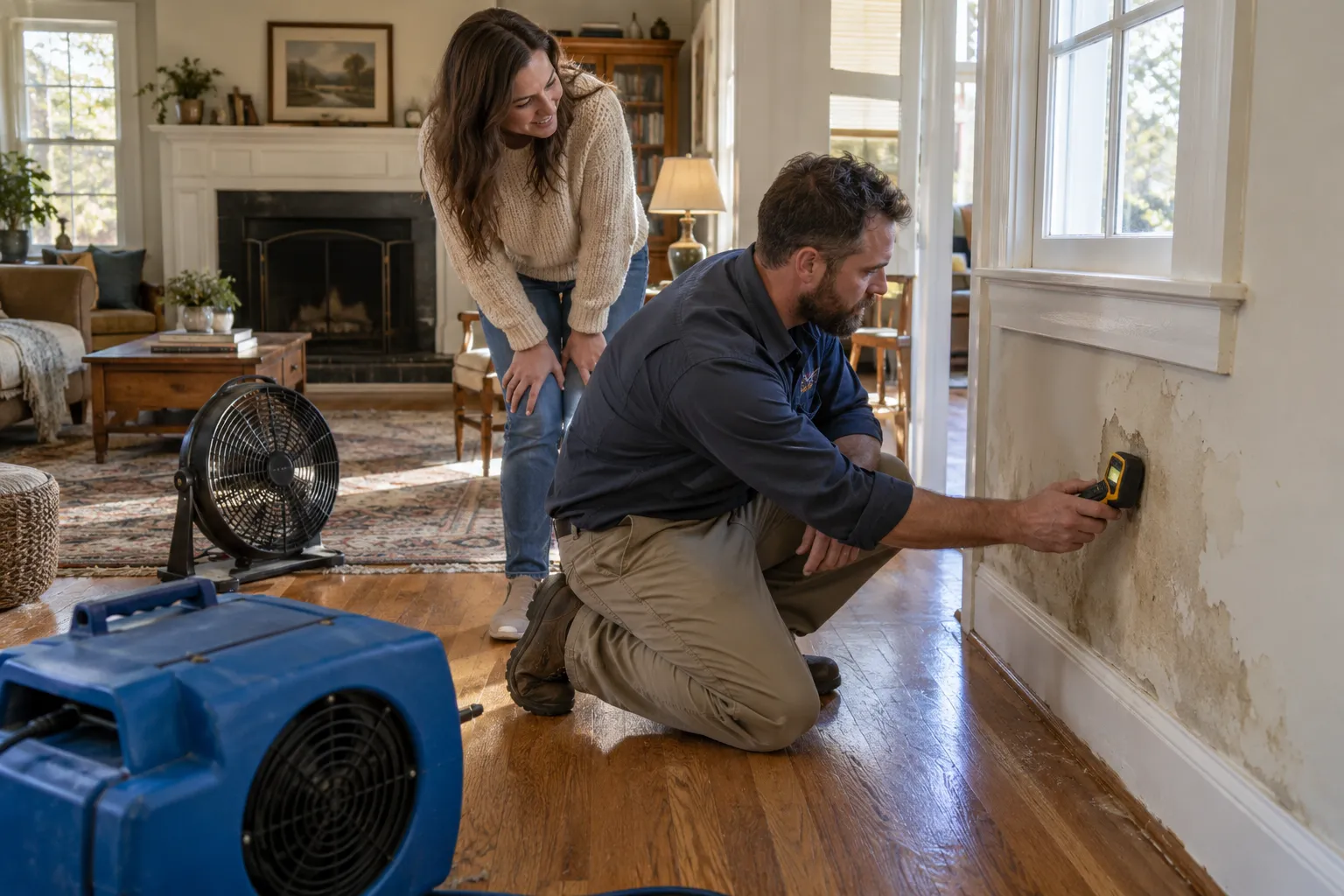
Most homes take about three to five days to dry, but every job is different. Drying time depends on how much water there was, how long it sat, the materials involved and the weather. A restoration provider uses air movers and dehumidifiers, then checks moisture readings until materials are back to normal levels. Ask your provider to share those readings with you.
How much does water damage restoration cost?
Costs vary widely by job. Across the U.S., small jobs often cost a few hundred dollars, while larger jobs with extensive drying, material removal and repairs can reach several thousand dollars or more. The size of the area, the type of water and how long it has been sitting all affect the price. Always ask for a written quote before work begins.
Does homeowners insurance cover water damage?
Many homeowner policies cover sudden and accidental water damage, such as a burst pipe or a failed water heater. Damage from slow leaks, poor maintenance or outside flooding is often treated differently, and flood damage usually needs separate flood insurance. Check your policy or call your insurer. Restoration providers can often help you document the damage with photos and moisture readings for your claim.
How soon can mold grow after water damage?
Mold can start to grow on damp materials within a day or two. That is why quick extraction and thorough drying matter so much. Drywall, carpet pad, insulation and wood framing can hold moisture even when the surface feels dry. A provider can use moisture meters to find hidden water and dry those areas before mold has a chance to take hold.
Can I clean up water damage myself?
You can handle a small spill of clean water with towels, a wet vacuum and fans. Larger leaks, flooded basements or water that has soaked into walls and floors usually need professional equipment. Moisture often hides where you cannot see it. Contaminated water, such as sewage backups, should always be handled by trained professionals with the right protective gear.
Do I need to leave my home during water damage restoration?
Most homeowners can stay at home while drying equipment runs. The equipment can be noisy and some rooms may be off limits for a few days. You may need to leave if the water is contaminated, if there is significant mold, or if the power has to stay off. Your provider can tell you what to expect after they inspect the damage.
How does Varygas Restoration work?
Varygas Restoration is a referral service. When you call or request an estimate, we connect you with an independent water damage restoration provider that serves your area. That provider inspects the damage, gives you a written estimate and, if you choose, does the work. We do not perform restoration services ourselves, and you are never obligated to hire the provider we connect you with.
Contact Us
Get in touch
Got water where it shouldn't be? Call Varygas Restoration now to check provider availability near you and talk through your next steps.